fAIrification: From Annotation to AI Readiness
This hands-on guide was designed for the PlantAI Summer School of TRR 175 „The Green Hub“ held August 5th - 7th, 2026.
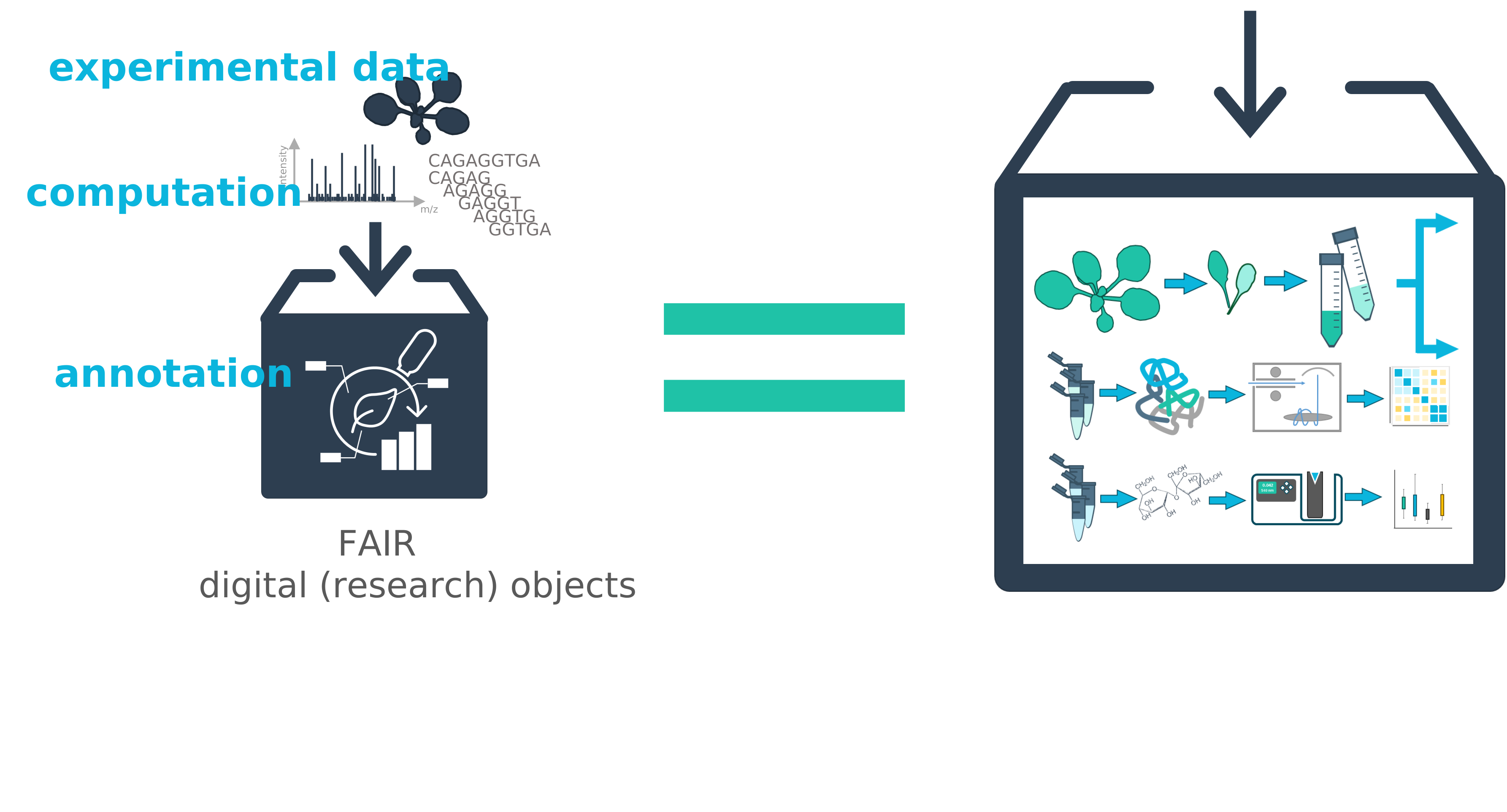
ARCs are structured data containers, so-called FAIR Digital Objects. ARCs help you organize your research data in a standardized way. They are based on existing standards, unifying machine and human readability!
About this guide
Section titled “About this guide”Starting out with ARCs can be a bit overwhelming. This guide walks you through the process of creating your first ARC, adding data to it, and sharing it with collaborators. Together we will follow a fictional researcher Viola on her journey to create her first ARC.

Hi, I recently heard about the Annotated Research Context (ARC) and that it could help me towards using AI on my data. However, I only remember the basic ARC structure and something about metadata?! 🥲
In this summer school we will also be using an AI agent to directly benefit from ARCs.

Hi! I love to support you with code and data analysis. I don’t want to show off, but I’m really strong with any kind of data and data analysis. I can be quite creative – whenever I miss something, I might just invent it. So, to be honest: the more metadata provided, and the more it is structured, the better I can support your research.
Viola’s PhD Project
Section titled “Viola’s PhD Project”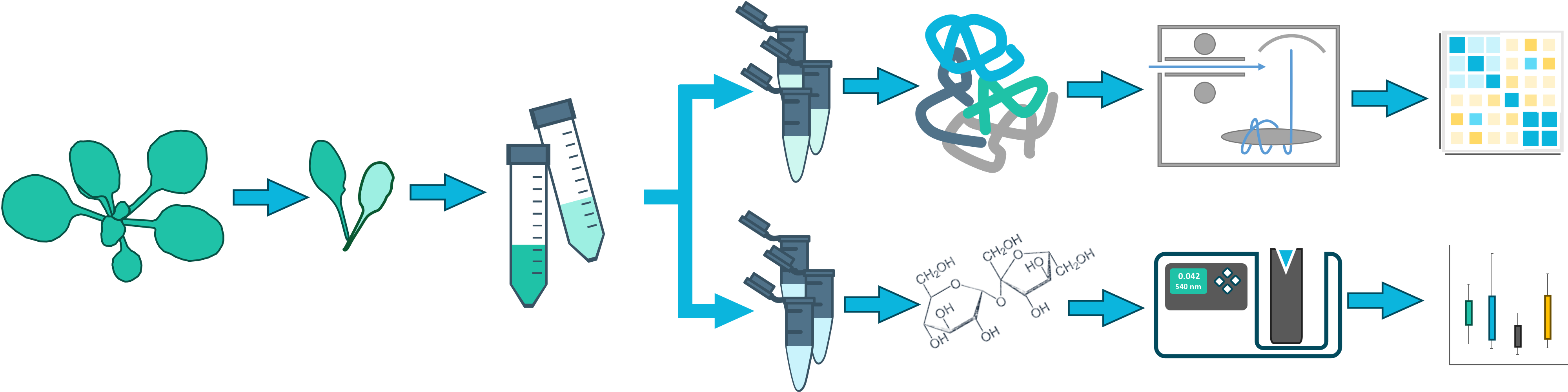
For my PhD I investigate the effect of cold stress on sugar metabolism in A. thaliana. I grew the plants under ambient (25 °C) and cold stress (6 °C) conditions, harvested leaves from a two-day time series experiment, extracted proteins and soluble sugars. I submitted the protein samples to a nearby core facility for proteomics. After a few weeks of iterative consultation with the facility head as well as technicians and computational biologists, I received back a wealth of raw and processed data. The extracted sugars I measured myself via a plate reader assay. From the data I produced figures using a mix of code and statistical software. Now I want to wrap everything up to publish the results in the Journal of Wonderful Plant Sciences.
Demo data
Section titled “Demo data”To follow along this guide:
- Please download this unstructured demo dataset
- Unzip the folder
Violas-PhD-Project.zipand store it somewhere ready for the next steps